
The Problem Is How We Design Learning
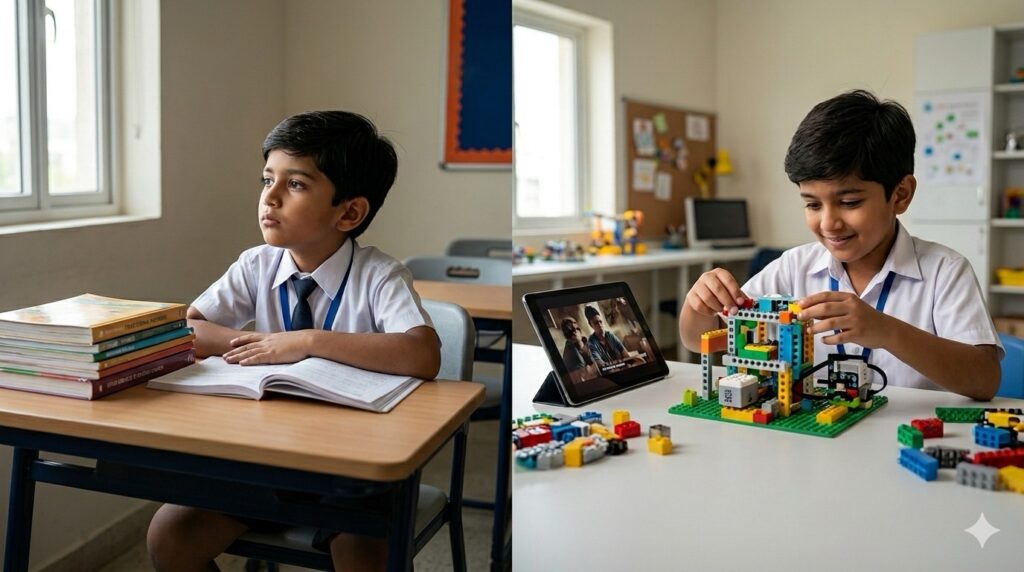
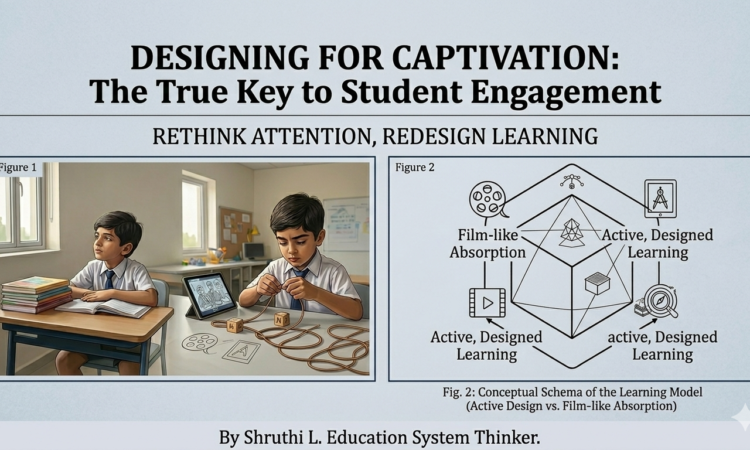
Why can a child sit through a three-hour film, remember every scene, repeat the dialogues days later—and yet struggle to stay present in a 30-minute classroom lesson?
The easy answer is ‘attention span’.
The harder—and perhaps more honest—answer—is design.
Think about the last time a child in your life was completely absorbed. Not reminded to focus. Not told to sit still. Not asked to “pay attention.”
Just fully present—eyes wide, leaning forward, deeply immersed.
Chances are, they were watching something, playing something, building something, or solving something.
They were probably not sitting in a classroom.
And that contrast should make all of us—parents, teachers, and school leaders—pause.
Because the industries shaping entertainment today—🎬 films, 🎮 gaming, 📱 social media, and 📺 streaming platforms—have spent billions studying one question:
How does the human brain pay attention?
They understand anticipation.
They engineer reward cycles.
They optimise emotional hooks.
They study memory, motivation, and behavioural patterns with remarkable precision.
They do not hope for engagement.
They design for it.
Education, however, often still behaves as though attention should be given automatically.
We continue to expect children to sit with static textbooks, absorb information passively, and remain engaged in systems designed for a very different world.
Feedback is delayed.
Progress feels invisible.
Curiosity is often treated as disruption rather than a learning asset.
This is not a criticism of teachers.
Teachers today are carrying enormous responsibility—balancing syllabus completion, assessments, administrative work, changing curriculum expectations, parental expectations, and now the demands of new policy shifts.
The challenge is not teacher willingness.
It is structural design.
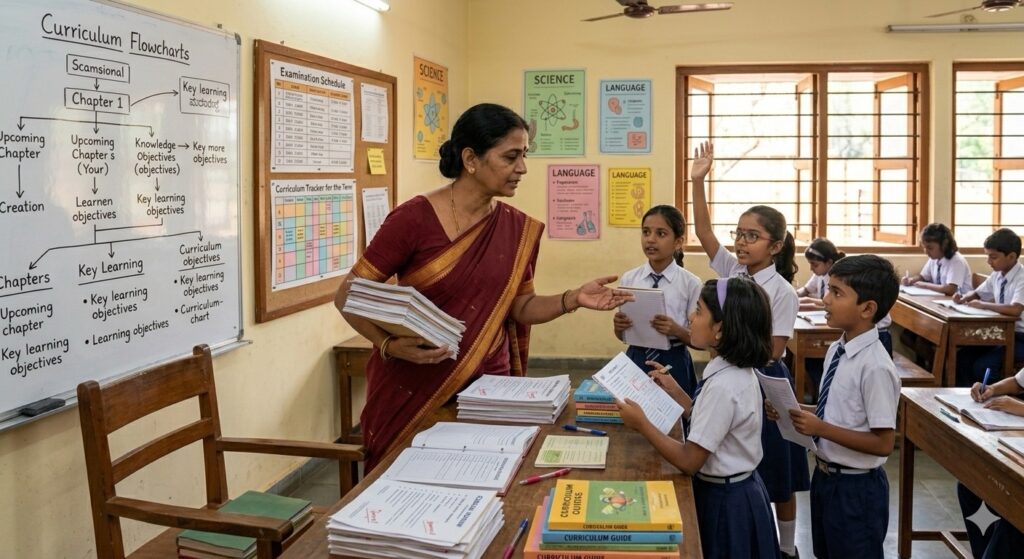
Across schools, especially with the evolving direction of NEP 2020 and recent CBSE shifts toward competency-based learning, the intention is clear: move from rote learning to deeper understanding.
But implementation is rarely simple.
Teachers are often being asked to deliver transformation inside systems still heavily driven by coverage, timelines, and measurable completion.
And that creates a quiet contradiction.
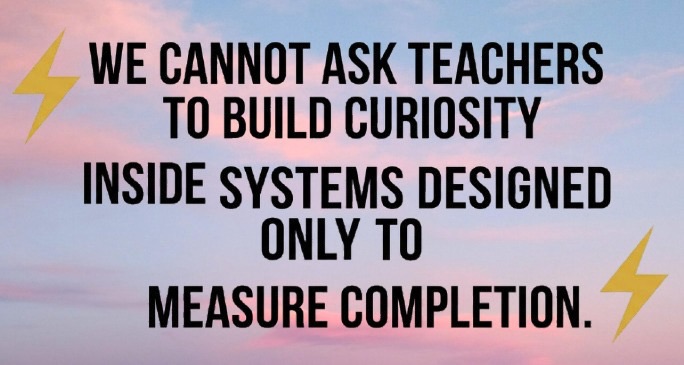
When classrooms are forced to prioritise finishing over understanding, depth becomes difficult. And that is where the real problem begins.
Because neuroscience tells us something both simple and powerful:
🧠 The brain does not learn best through passive reception. It learns through curiosity, challenge, emotion, and feedback.

When a child plays a game and levels up, dopamine—the brain’s reward and motivation chemical—reinforces progress.
When they watch a powerful story unfold, oxytocin—linked to emotional connection and memory—helps that learning stays longer.
When they solve a real-world problem, make mistakes, and try again, neuroplasticity—the brain’s ability to form and reorganise new pathways—literally strengthens learning.
In other words: “Learning should activate the brain, not suppress it.”
Yet too often, classrooms still reward stillness more than thinking. Students are praised for sitting quietly more than asking difficult questions. We celebrate completion more than exploration. We measure memory more than meaning.
The result is predictable: Learning begins to feel like obligation, not discovery.
But the answer is not to turn classrooms into entertainment. Education should not compete with cinema by becoming louder. It must become more meaningful.
The real question is not:
_______________________________________________
“How do we make learning fun?”
________________________________________________
It is:
________________________________________________
“Are we designing learning in a way the brain naturally responds to?”
________________________________________________
What This Looks Like in Practice
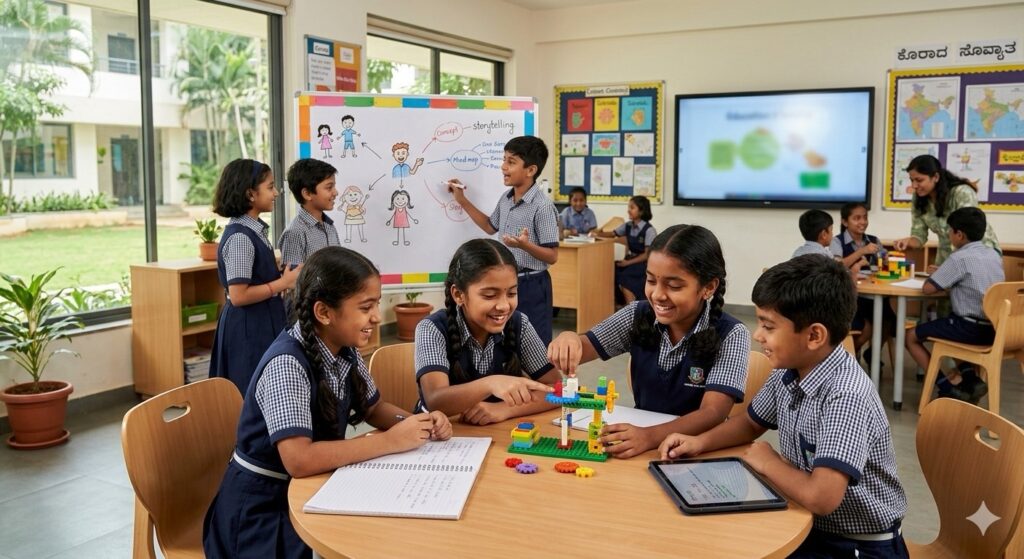
Real change in learning does not begin with bigger classrooms or better technology alone—it begins with better design.
When classrooms align with how the brain naturally learns, engagement stops feeling forced. Students participate more deeply, retain more meaningfully, and move from passive listening to active discovery.
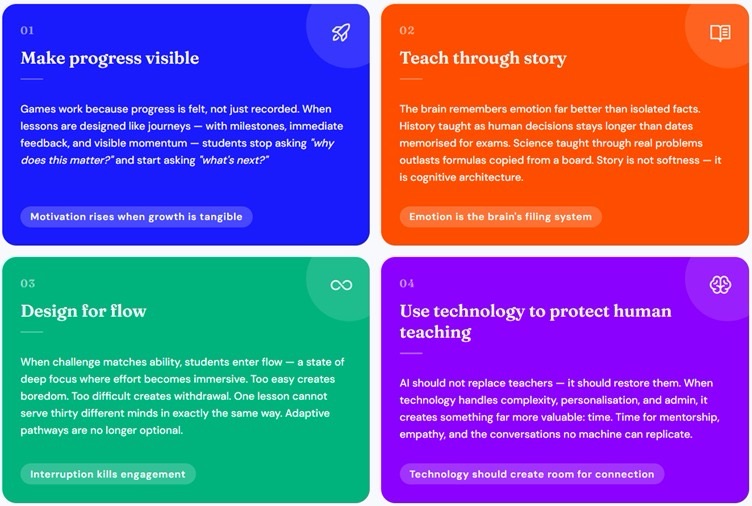
These four shifts are not trends—they are practical, neuroscience-backed ways to make learning feel human again.
The Quiet Urgency
Parents, too, must be part of this conversation.
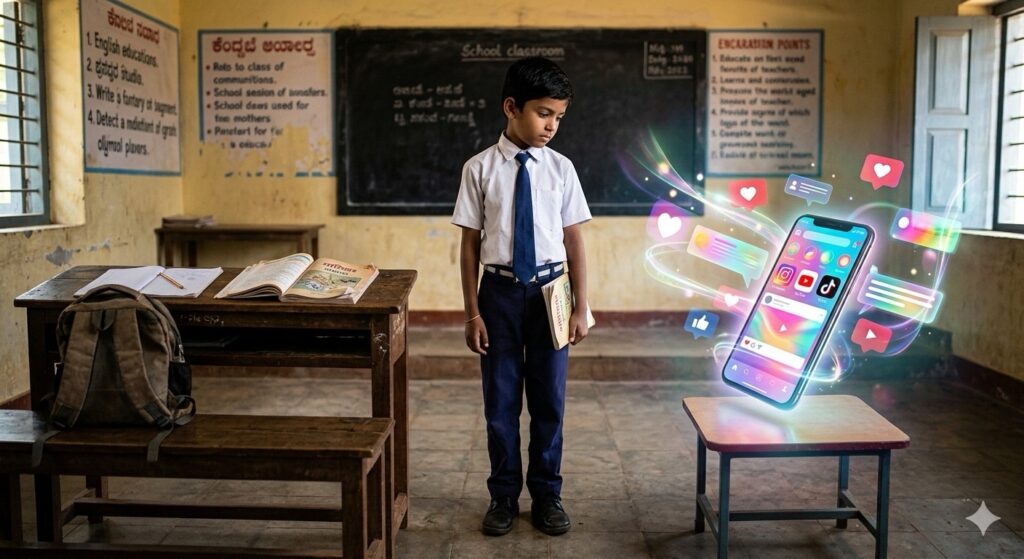
It is easy to blame screens and assume discipline is the answer. But when a child can focus deeply for hours on one experience and disengage from another in minutes, something important becomes clear:
Attention has not disappeared.
It has simply been claimed by environments designed to deserve it.
The question, then, is not whether children can focus.
It is whether learning environments are worthy of that focus.
And here lies the quiet urgency.
If schools do not intentionally design for engagement, other industries will continue to do it—and often for profit, not growth.
The same cognitive energy that could be building knowledge, resilience, and independent thought is already being captured by platforms optimised for retention, consumption, and endless scrolling.
This is not a reason for despair.
It is a reason for intention.
Schools and parents do not need to outspend the entertainment industry.
They need to borrow its most important lesson:Design matters.
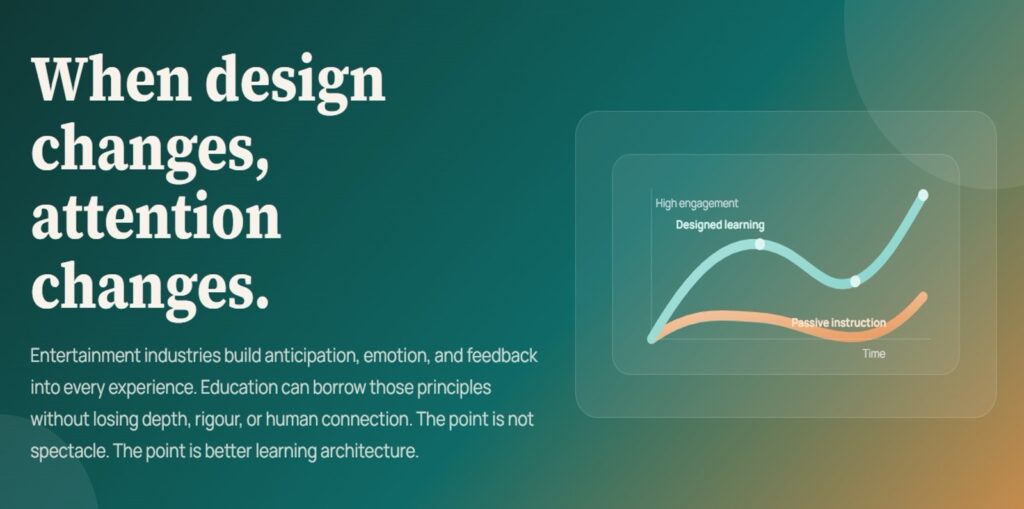
An engaged child is not a miracle of discipline. They are the result of an environment that understands how the brain works—and builds accordingly.
We see this in small but extraordinary ways:
🔍 a science lesson turned into a detective mystery
📚 a struggling reader becoming the loudest voice in a discussion
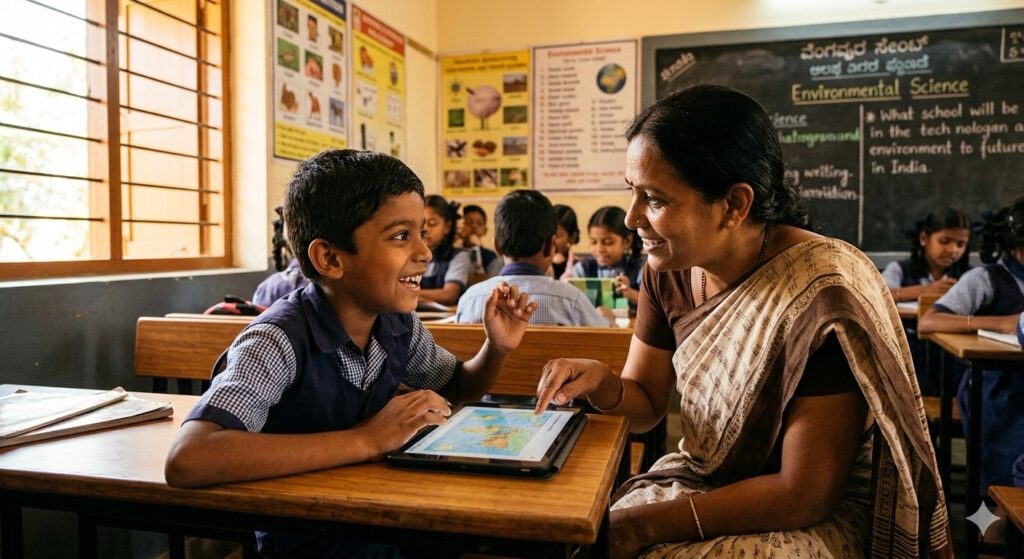
🎨 a child once resistant to homework leaning forward because learning finally feels like discovery
The brain, given the right conditions, does not need to be forced to learn. It wants to.
A Better Question
The world has changed. Children have changed.
Education must respond—not by defending old habits, but by asking better questions.
Not:
________________________________________________
“Why are students distracted?”
________________________________________________
But:
________________________________________________
“What kind of learning deserves their attention?”
________________________________________________
That is a question worth sitting with.
~Shruthi L
Education Systems Thinker