
By Devika P
Assistant Professor, Mysuru
Social media is not just entertainment; it has become a rapid dopamine delivery system. Every notification, like, reel, or message acts as a quick stimulant, giving the brain an instant reward with almost no effort. Unlike meaningful achievements that require patience and sustained effort, this stimulation is immediate and unpredictable — which makes it addictive.
Within seconds, the brain experiences a rush of dopamine, sometimes mixed with cortisol (stress), adrenaline (excitement), and constantly shifting emotional triggers depending on what we consume. One scroll can make us laugh; the next can make us anxious or angry. This constant hormonal rollercoaster trains the brain to crave intensity rather than emotional balance.
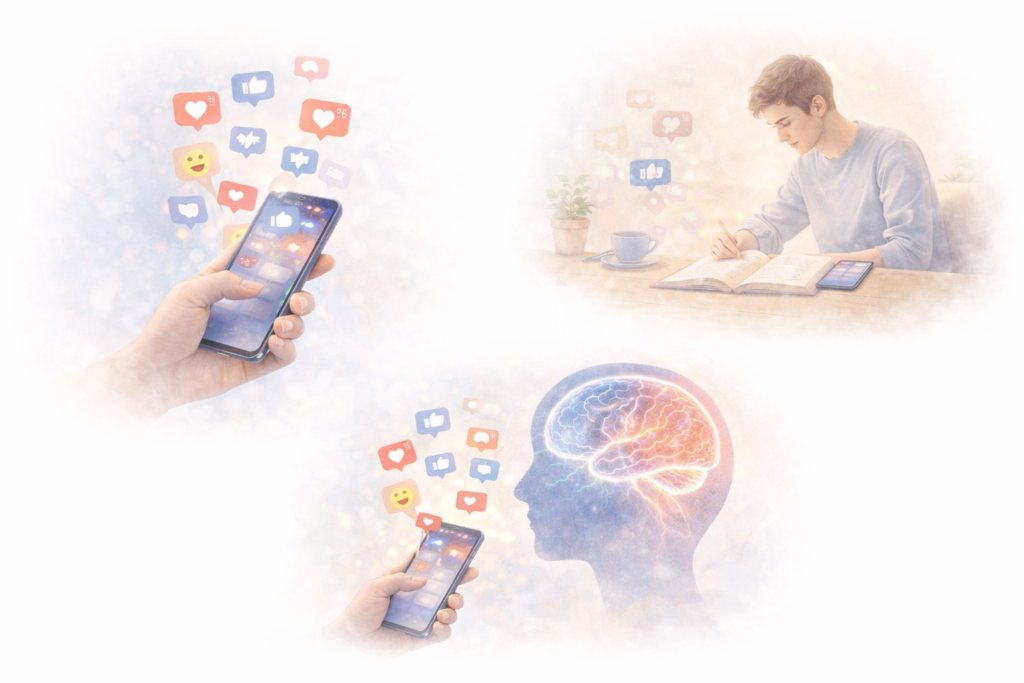
The impact is becoming visible in real life. Attention spans are shrinking — from minutes to mere seconds. Many young people today give content barely 15 to 20 seconds to impress them before scrolling away. If it does not stimulate instantly, it is dismissed.
Classrooms feel slow. Conversations feel long. Real-life achievements feel less thrilling compared to algorithm-driven highs.
The deeper concern is not just addiction — it is rewiring. When the brain adapts to constant, quick stimulation, patience, deep focus, and emotional regulation begin to weaken. Social media may entertain us, but it is also reshaping how we think, feel, and connect — one scroll at a time.
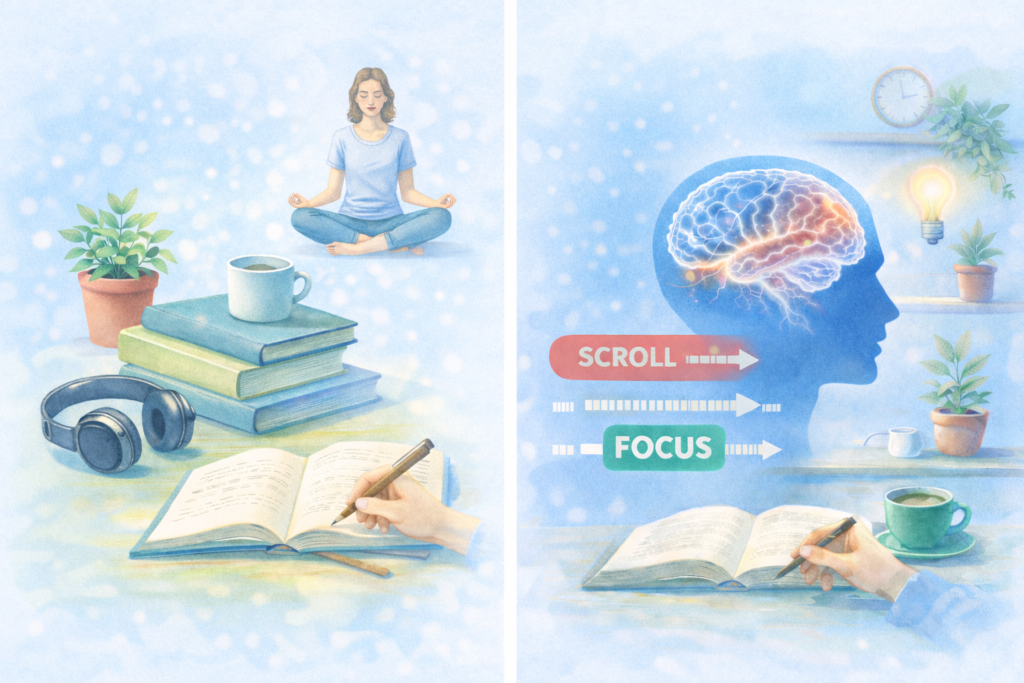
Every invention is a coin with two faces, prons and cons, with that being said, the question is not whether social media is good or bad. The real question is whether we are using it consciously or whether it is quietly shaping us without our awareness. In a world of endless scrolling, the true skill of the future may not be speed, but sustained attention. The ability to pause, focus, and think deeply might become the rarest strength of all.
By Ms.Devika P
Assistant Professor
Mysuru.