


When success is constantly visible, but struggle is hidden, children begin to see failure not as part of learning — but as a judgment of who they are.

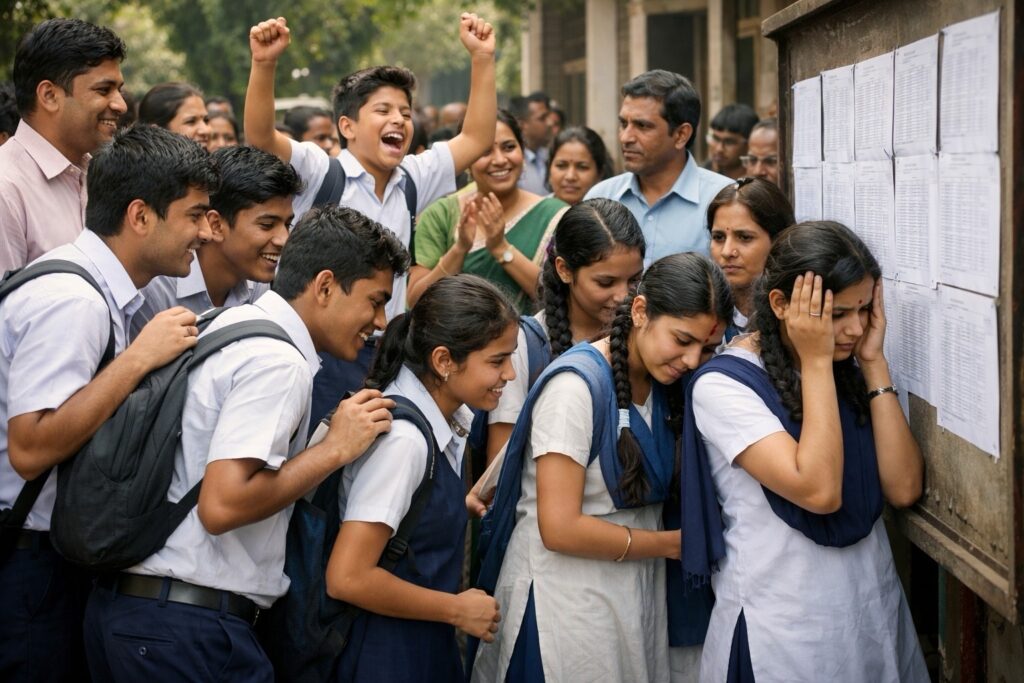
Across the country, examination season is underway. Classrooms are quieter, study schedules tighter, and households more tense than usual. In a few weeks, results will begin to arrive.
For many children, those results will bring relief and celebration. But every year, this period also brings something far more troubling — headlines about students overwhelmed by disappointing scores.
These stories are painful to read, and even harder to ignore. But beyond the immediate tragedy lies a question we rarely pause to examine:
When did failure begin to feel so unbearable for our children?
Across conversations with parents, educators, and students, a pattern emerges. When children stumble — a poor test score, a lost competition — the reaction often goes beyond disappointment.
There is hesitation. Withdrawal. A quiet sense that the failure says something permanent about who they are.
What should be a moment in learning begins to feel like a judgment of identity.
When Success is Visible, but Struggle is Not
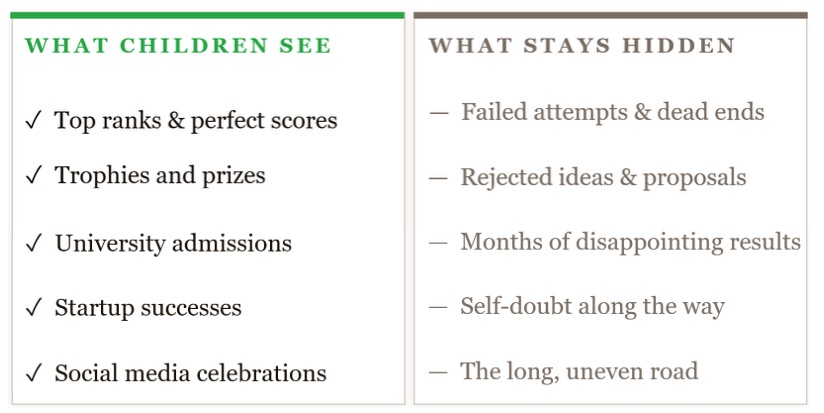
Children today are growing up in a world where success is constantly visible. Top ranks, perfect scores, trophies, university admissions, startup successes — the outcomes are everywhere. Social media celebrates them. Schools showcase them. Families proudly share them.
But the long, uneven road behind those successes — the failed attempts, rejected ideas, disappointing results — is rarely visible.
When struggle disappears from the story, children begin to see success as something that comes naturally to others. And when they encounter their own setbacks, the conclusion is often harsh and immediate: “Maybe I’m just not good enough.”
“Failure, in that moment, stops being information. It becomes identity.”
The Quiet Cost of Protecting Children from Failure
In many ways, adults have contributed to this shift — often with the best intentions.
We praise outcomes more than effort.
We soften disappointment.
We try to shield children from frustration, discomfort, and struggle.
But resilience does not develop in the absence of failure. It develops through encountering difficulty, processing disappointment, and discovering that setbacks are not the end of the story.
Curiosity grows when children are free to try without the fear of being judged.
Resilience grows when they learn that falling short is not a verdict — it is feedback.
What Children Actually Need from Us
If we want children to face challenges with courage, we must resist the urge to remove failure from their path. Instead, we must help them understand what failure truly means.
That begins with a few small but powerful shifts:
1. Talk Openly About Failure
Share stories from science, sports, and everyday life where progress came through repeated setbacks.
2. Praise Effort & Curiosity
Not just the final result. Recognise the journey — persistence and growth matter more than outcomes.
3. Encourage Reflection
Replace “Why didn’t you succeed?” with “What did you learn?”
Shift the frame from verdict to feedback.
4. Create Safe Spaces for Struggle
At home, in classrooms, and in communities — mistakes must be treated as part of growth, not failure of character.
These shifts do not remove disappointment. But they transform it into something constructive.
As Results Season Approaches
In the coming weeks, exam results will begin to arrive. Some children will celebrate. Others will feel disappointed.
What happens next — in our homes, our schools, and our conversations — will shape how those children interpret that moment.
Will the result become a label they carry?
Or will it become a lesson they learn from?
Failure, after all, has always been part of learning.
Perhaps the real task before us — as parents, educators, leaders, and communities — is not to protect children from failure, but to help them understand it.
Not as a verdict, but as:
A step in the journey, not the end of it.
And as this examination season unfolds, that reminder may be more important than ever.
— Shruthi L
Education Systems Thinker