

Why Your “1% Wins” Are Better Than New Year’s Resolutions
Megha Kiran
By the second week of February, the early-morning crowds at Kukkarahalli Lake start
to thin out. The ambitious “total detox” plans made on January 1st are often gathering
dust, and the convenience of a quick bakery snack is starting to look a lot more
tempting than the rigid meal prep we promised ourselves.
If you feel your motivation waning, here is a secret: It’s not a lack of willpower; it’s a
flaw in the strategy. As a nutritionist here in Mysuru, I see this cycle every year. We try
to overhaul our entire lifestyle overnight moving from sedentary to “climbing Chamundi
Hill every morning” only to end up changing nothing. The solution lies in the psychology
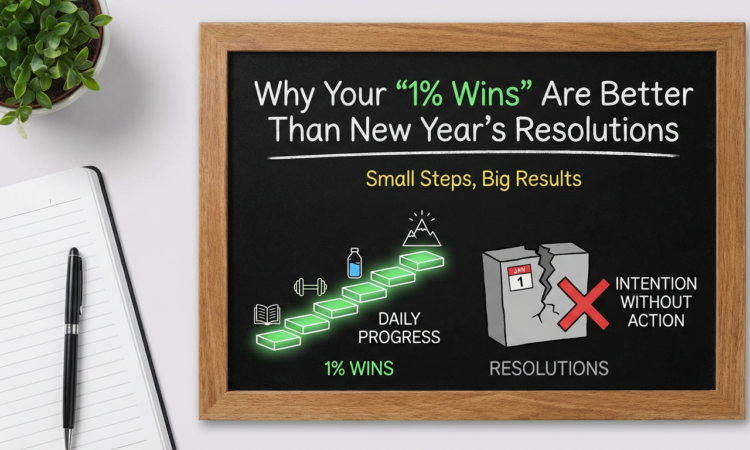
of the Small Win: the idea that 1% changes are scientifically superior to 100%
resolutions.
The problem with massive resolutions is that they are “high-cost” behaviors. They
require immense mental energy that most of us, with our busy work and family lives,
simply don’t have in surplus. In contrast, the 1% rule relies on the power of
compounding.
If you improve a habit by just 1% every day, you don’t just get 365% better. Thanks to
the way habits stack, you end up 37 times better by the end of the year. Conversely,
trying to change 100% overnight creates a “shock” to your system that almost always
leads to a total snap-back to old patterns by mid-February.
There is a biological reason why small changes stick. Every time you achieve a goal,
your brain’s reward system releases dopamine. This chemical doesn’t just make you
feel good; it fuels motivation for the next task.
When you set a goal like “lose 10 kgs,” your brain doesn’t get a dopamine hit until you
see a major change on the scale which could take weeks. This creates a “reward
deficit.” However, when you set a “Micro-Win” like adding a portion of greens to your
Oggarane Avalakki you succeed immediately.
That tiny hit of dopamine creates Success Momentum. In psychology, this is known as
the “Winner Effect“: the more frequently you experience small successes, the more
chemically “wired” you become to take on larger challenges later.
In my practice at Nutrinest with Megha, we don’t start with a restrictive list of
“forbidden” foods. We focus on crowding out the less-nutritious options with 1%
additions. When the barrier to entry is low, your resistance to the habit disappears.
Consider these 1% nutritional pivots for the Mysuru lifestyle:
● Don’t worry about hitting 4 liters yet. Simply commit to drinking one full glass of
water before your morning filter coffee.
● Instead of a total diet overhaul, try adding two tablespoons of flaxseeds or chia
seeds to your afternoon curd rice or yogurt.
● Instead of “cutting all sugar” and feeling miserable, try pairing your fruit with a
protein (like an apple with a few almonds) to stabilise your blood sugar and
prevent that 4 PM energy crash.
These changes are so small they feel almost “too easy.” That is exactly the point. If a
habit is easy, you don’t need “New Year’s energy” to do it you can do it even on a rainy
evening or a hectic workday.
The goal isn’t just to eat better for a month; it’s to become the type of person who
prioritises their vitality. Whether you are walking the perimeter of the Palace or just
trying to navigate a busy family kitchen, remember: Big doors swing on small hinges.
If your January resolutions have faltered, don’t wait until next year. Lower the bar. Shrink
the goal. Focus on the 1% change you can make today. “Small aims is a crime; small
wins are a requirement.”
- – Megha Kiran
Senior Nutritionist & Founder of Nutrinest with Megha